 sciencedrawings
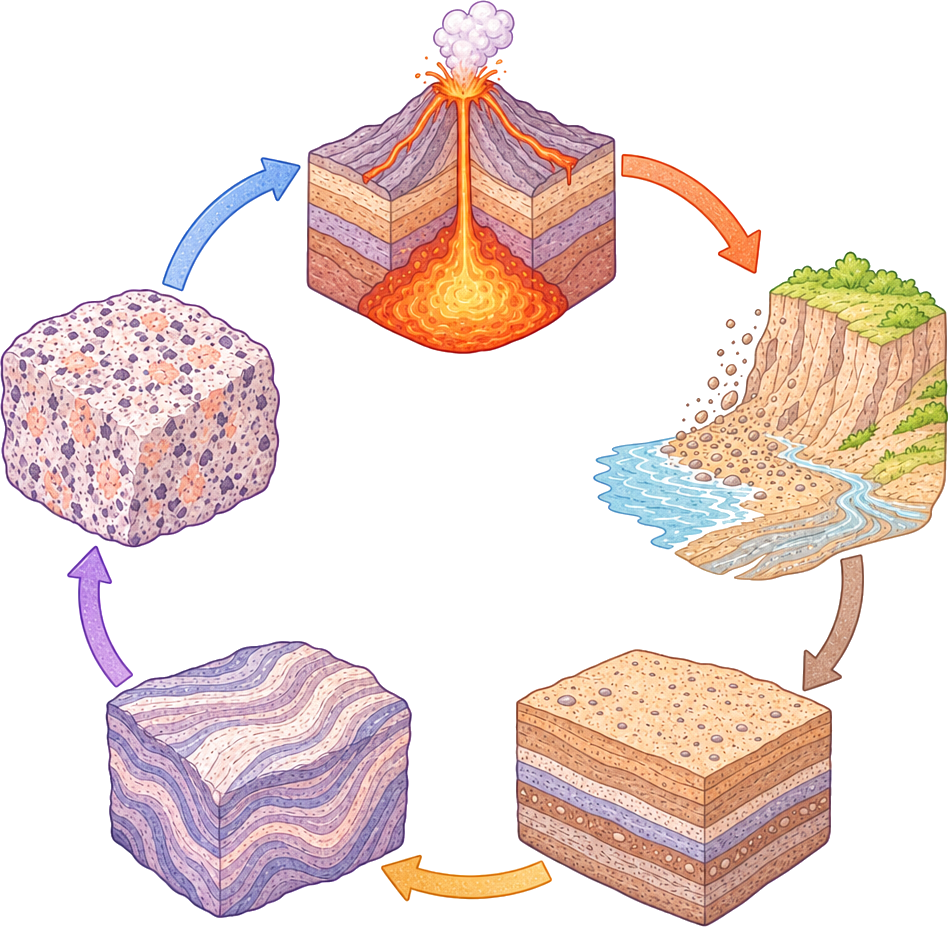 Melting
Igneous rock
Metamorphic rock
Heat and pressure
Magma
Weathering and erosion
Sediment
Compaction and cementation
Sedimentary rock
Rock Cycle Diagram
The rock cycle: igneous, sedimentary and metamorphic rock, sediment and magma, with the processes that link them. Labeled and blank versions.
PNG 1400×900 · HD 2800×1800 · SVG with editable labels
Free for personal, classroom and commercial use. A credit is appreciated, not required. Paste this under it:
<a href="https://sciencedrawings.com/">Drawing by sciencedrawings.com</a>Label the rock cycle
A free labeling quiz: drag each label to the box it belongs in, or tap a label and then tap a box. Great for revision, homework and class.
What each part does
- Melting
- Rock that gets hot enough deep underground melts into magma.
- Igneous rock
- Rock formed when magma or lava cools and hardens, like granite or basalt.
- Metamorphic rock
- Rock changed by great heat and pressure without melting, like marble or slate.
- Heat and pressure
- Deep underground, heat and pressure change rock into metamorphic rock.
- Magma
- Melted rock beneath Earth's surface; when it reaches the surface it is called lava.
- Weathering and erosion
- Rock is broken into small pieces by weather, then carried away by water, wind or ice.
- Sediment
- Small pieces of rock, sand and shells broken off by weathering and carried away by water, wind or ice.
- Compaction and cementation
- Layers of sediment are squeezed together and glued by minerals to form sedimentary rock.
- Sedimentary rock
- Rock made when layers of sediment are pressed and cemented together, like sandstone or limestone.
More like this
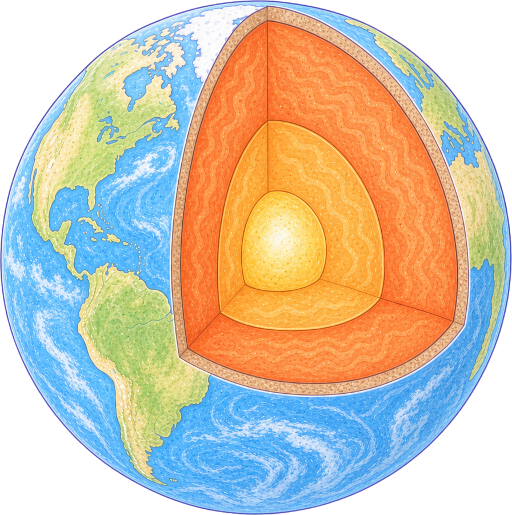 Earth's Layers Diagramlabeled + blank
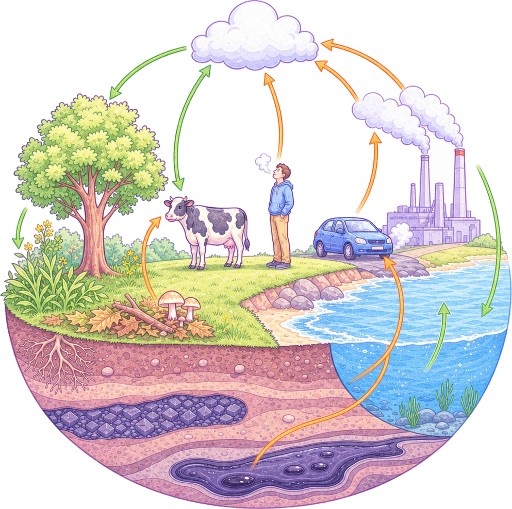 Carbon Cycle Diagramlabeled + blank
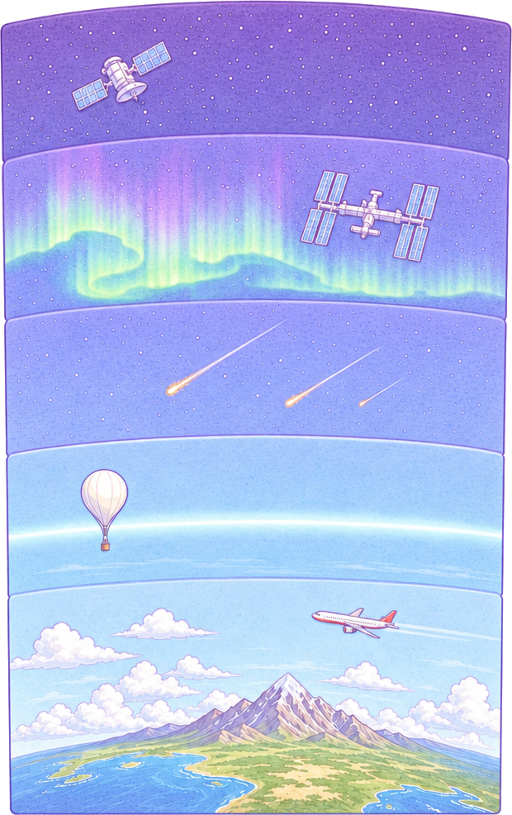 Layers of the Atmosphere Diagramlabeled + blank
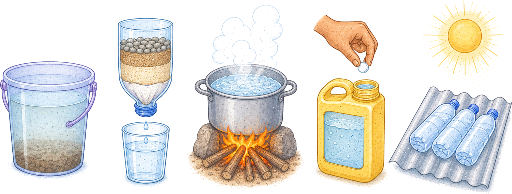 Methods of Water Purification Diagramlabeled + blank
All earth science drawings · Download the earth science pack (ZIP)